FPGA Marketing — Your Online Store for Development Boards, Microcontrollers & Accessories
FPGA Marketing
Showing 17–32 of 133 results
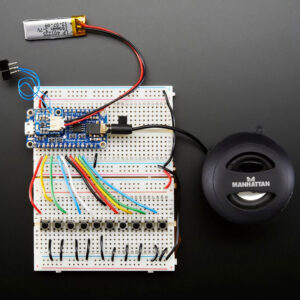
Trigger prerecorded WAV or OGG sound effects from buttons or control signals. Audio files are stored in 2 MB of onboard flash.
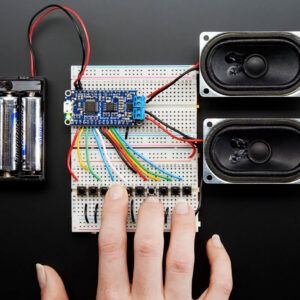
Trigger prerecorded WAV or OGG sound effects from buttons or control signals. This amplified version includes a 2 × 2 W output stage.
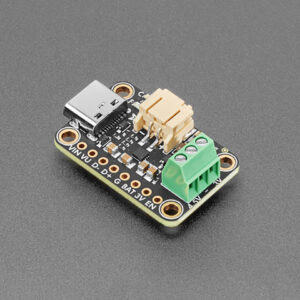
Charge a portable project from USB, DC or a solar source. This version has a buck converter for a regulated 3.3 V output.
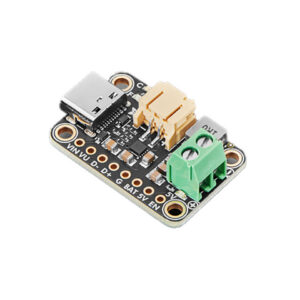
Charge a portable project from USB, DC or a solar source. This version has a boost converter for a regulated 5 V output.
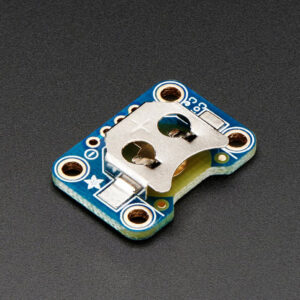
Power a low-current circuit or add battery backup for a real-time clock. The board accepts a CR1220 coin cell.
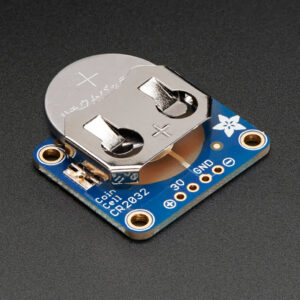
Power a low-current circuit or add battery backup for a real-time clock. The board accepts a CR2032 coin cell.
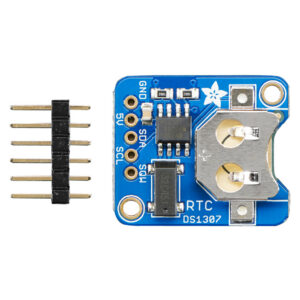
Keep time in a microcontroller project with a battery-backed DS1307 clock. A backup cell keeps the clock running when main power is removed.
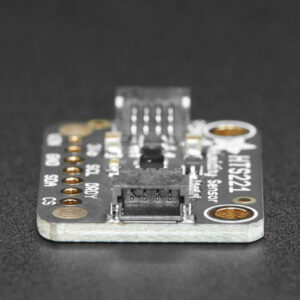
Measure ambient temperature and relative humidity with the HTS221. The STEMMA QT connector carries I2C for a plug-in sensor connection.
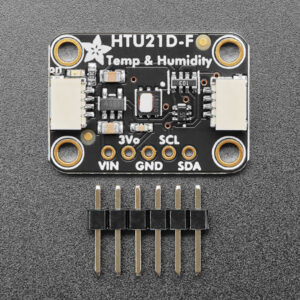
Measure ambient temperature and relative humidity with the HTU21D-F. The STEMMA QT connector carries I2C for a plug-in sensor connection.
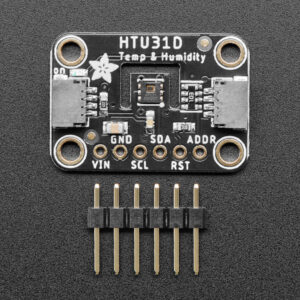
Measure ambient temperature and relative humidity with the HTU31-D. The STEMMA QT connector carries I2C for a plug-in sensor connection.
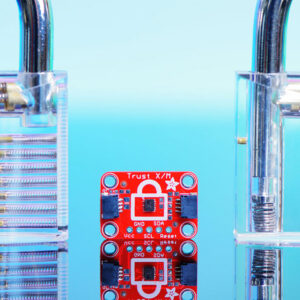
Add a cryptographic coprocessor to an embedded design. The Trust M breakout connects over I2C using STEMMA QT or Qwiic.
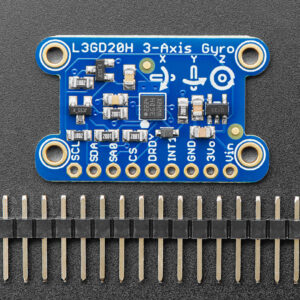
Measure angular velocity on three axes for motion tracking. The breakout supports both I2C and SPI hosts.
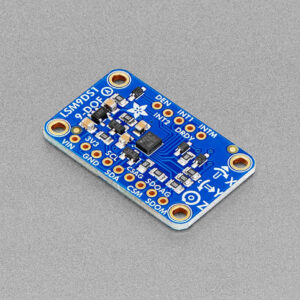
Measure acceleration, rotation and magnetic field on three axes each. The sensor also reports temperature.
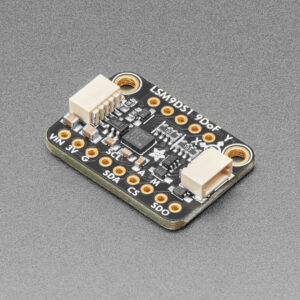
Measure acceleration, rotation and magnetic field on three axes each. This version provides STEMMA QT / Qwiic connections.
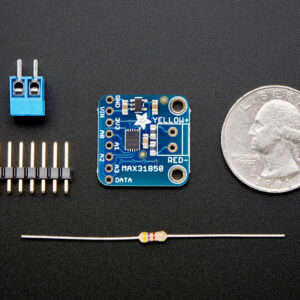
Connect a Type K thermocouple to a 1-Wire sensor bus. The data line uses 3 V logic.
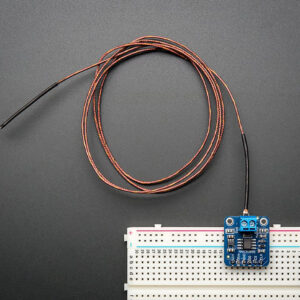
Read a Type K thermocouple from a microcontroller. The amplifier provides a digital reading with cold-junction compensation.